
1. Cloud-Based Team Collaboration Platform on AWS
Description
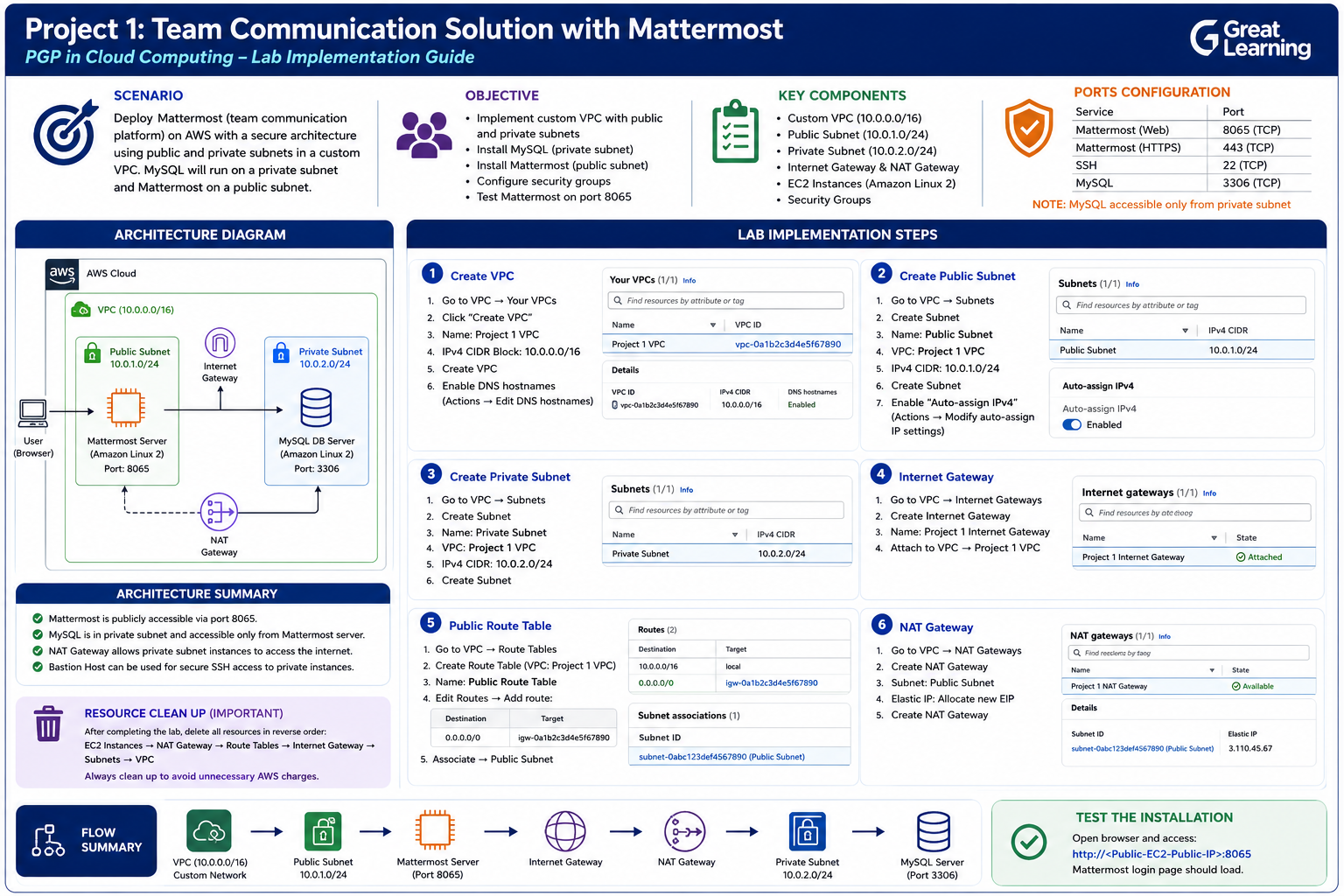
Designed and deployed a secure, highly available cloud infrastructure on Amazon Web Services (AWS) to host a self-managed Mattermost collaboration platform with a MySQL backend. The project involved designing a custom Virtual Private Cloud (VPC), configuring public and private subnets, implementing secure networking using Internet Gateway, NAT Gateway, Route Tables, Bastion Host, and Security Groups, and deploying application and database servers on Amazon EC2. The architecture demonstrates cloud networking, infrastructure provisioning, security best practices, and scalable application deployment.
Key Features
- Custom AWS Virtual Private Cloud (VPC) Architecture
- Public & Private Subnet Design
- EC2 Application and Database Server Deployment
- Secure MySQL Database Configuration
- Mattermost Collaboration Platform Deployment
- Internet Gateway & NAT Gateway Configuration
- Route Tables and Network Routing
- Bastion Host for Secure Administrative Access
- Security Groups & Firewall Rule Configuration
- Cloud Infrastructure Hardening
- Auto Scaling & Load Balancer Architecture Recommendations
- High Availability & Elastic Cloud Design
Business Impact
Implemented a secure cloud-native collaboration platform that enables organizations to host internal communication services within their own AWS environment. The architecture improves data security, supports organizational compliance requirements, isolates database resources in private networks, and provides a scalable foundation through Auto Scaling Groups and Load Balancers for future growth.
Technologies Used
Amazon Web Services (AWS) • Amazon EC2 • Amazon VPC • Public & Private Subnets • Internet Gateway • NAT Gateway • Route Tables • Security Groups • Bastion Host • Amazon Linux 2 • MySQL • Mattermost • SSH • Linux • Cloud Networking • Infrastructure as a Service (IaaS) • Cloud Security
2.Containerized Serverless Application Deployment on AWS
Description
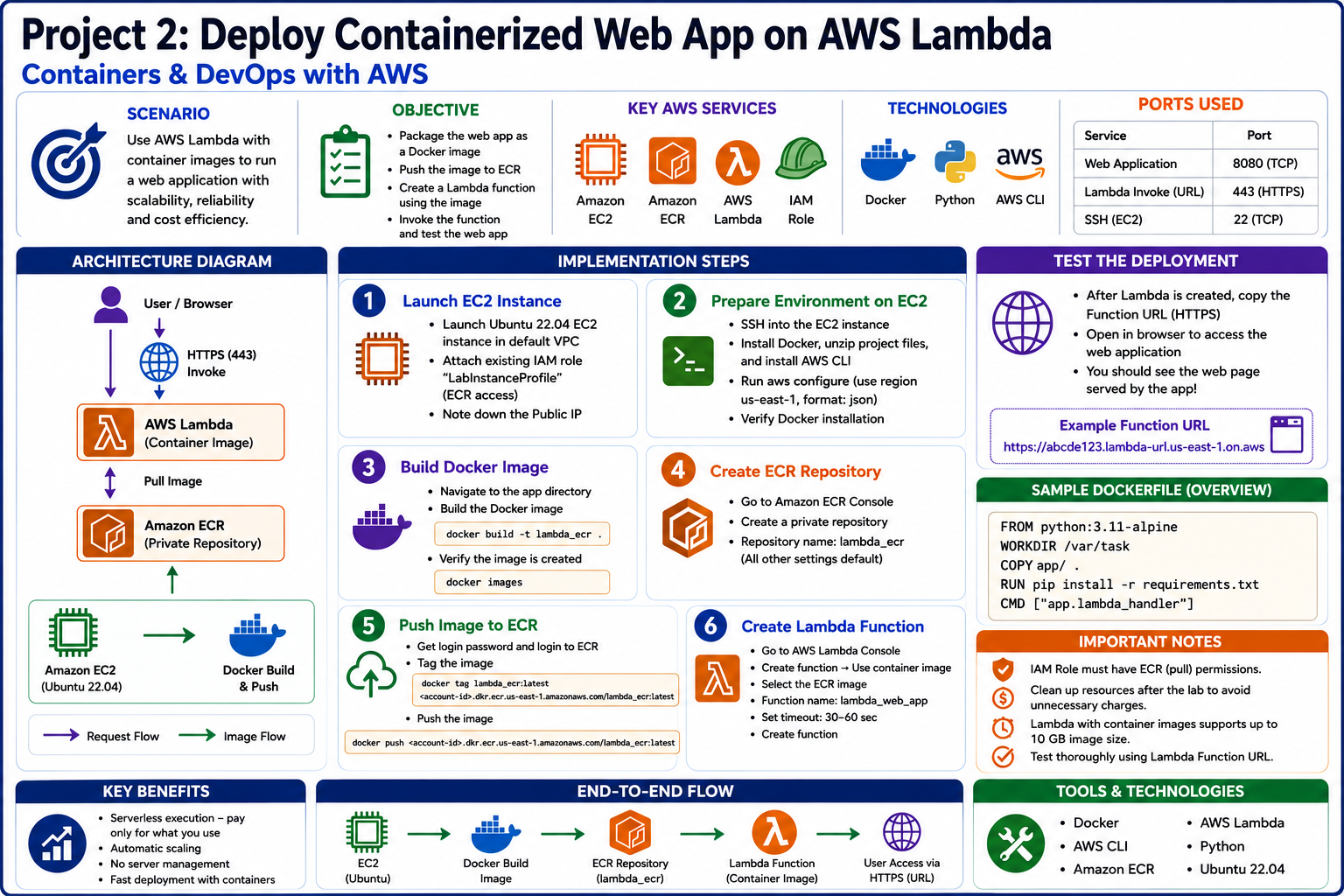
Designed and deployed a cloud-native serverless application using Docker and Amazon Web Services (AWS). The project involved containerizing a Python web application using Docker, building lightweight container images based on Alpine Linux, storing images securely in Amazon Elastic Container Registry (ECR), and deploying them as AWS Lambda functions. The solution demonstrates modern DevOps practices, container lifecycle management, serverless computing, and scalable cloud application deployment without managing infrastructure.
Key Features
- Docker Containerization of Python Applications
- Custom Docker Image Creation using Alpine Linux
- Amazon Elastic Container Registry (ECR) Integration
- Secure Container Image Management
- AWS Lambda Deployment using Container Images
- Serverless Application Execution
- Cloud-Native Application Packaging
- Docker Image Versioning and Registry Management
- CI/CD Ready Deployment Architecture
- Container-Based Application Testing
- Best Practices for Stateless Application Design
Business Impact
Implemented a scalable and cost-efficient serverless deployment pipeline that eliminates server management while enabling rapid application deployment using container technology. The solution improves portability, simplifies software delivery, accelerates release cycles, and supports modern DevOps workflows through containerized application deployment on AWS.
Technologies Used
Amazon Web Services (AWS) • AWS Lambda • Amazon Elastic Container Registry (ECR) • Docker • Dockerfile • Python • Alpine Linux • Ubuntu • Amazon EC2 • AWS CLI • Linux • Serverless Computing • Containerization • DevOps • Cloud Computing • CI/CD Concepts